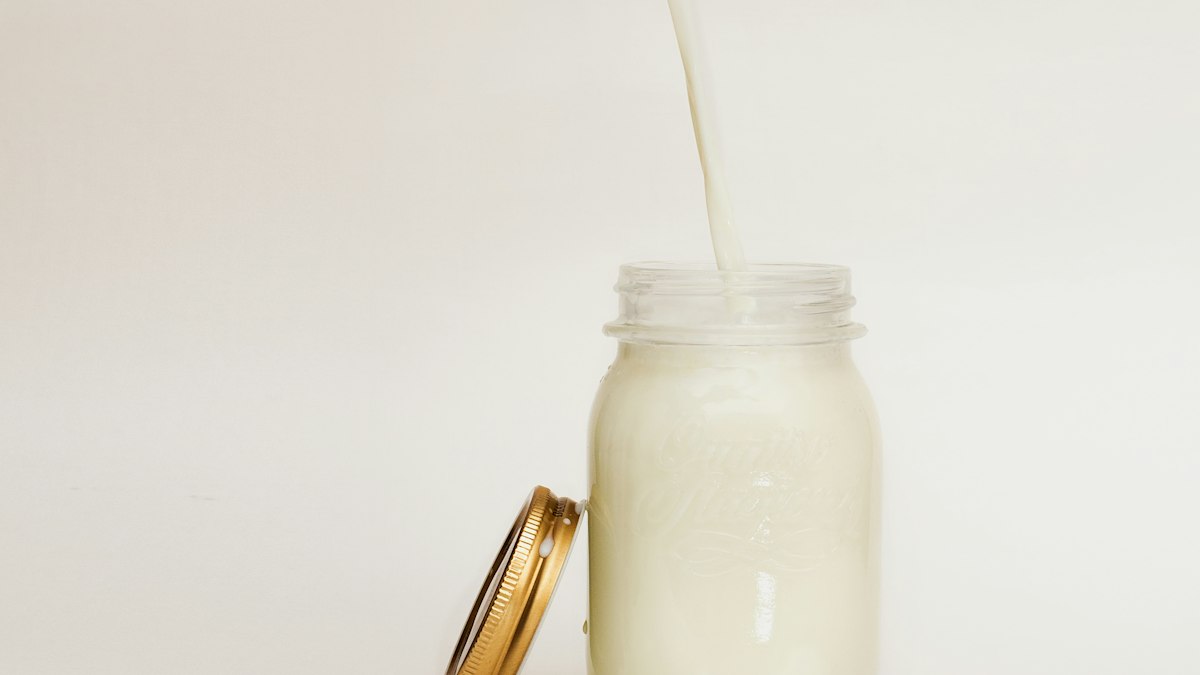
If you grew up with a milkman, you probably never saw him. You heard him.
A truck idling at the curb while it was still dark. Glass bottles clinking in a wire carrier. The lid of the milk box on the porch, opening and closing. By the time you came down for breakfast, the milk was already there, cold, and yesterday's empties were gone.
What the Job Was
The milkman, or route man, drove for a local dairy and delivered to homes on a regular schedule. Milk first, but often much more: cream, butter, eggs, cottage cheese, and later orange juice.
It was a big business. According to U.S. Department of Agriculture figures, home delivery still accounted for 29.7 percent of milk sold in 1963. By 2005, it was 0.4 percent.
A Day on the Job
The route started long before sunrise. Drivers loaded their trucks at the dairy with crates of cold glass bottles, then worked through the neighborhood while most families slept.
At each house, the driver checked the porch. Customers left notes rolled into the empty bottles ("2 quarts today, no cream, thank you"), and some milk boxes had a little dial or card to show the order. He swapped full bottles for empties and moved on.
Then the second half of the job: money. On many routes, the driver also collected payment on a set day each week, kept a route book, and handled the families who were behind.
In older city neighborhoods, the milk once came by horse-drawn wagon. Drivers liked to say their horses knew the route so well they would walk to the next stop on their own.
The Skills Nobody Saw
A route man kept hundreds of standing orders in his head and in a pocket book: who took two quarts, who took buttermilk on Fridays, who was away for the week.
He carried heavy wire baskets of glass up icy steps in January without breaking a bottle. He drove in every kind of weather. And he was a salesman, too. When a household changed (a new baby, a teenager who drank a gallon a day, a family away on vacation), the order changed, and the good drivers noticed first.
Tools of the Trade
The milk box. An insulated metal box on the porch or beside the door, often painted with the dairy's name. It kept milk cool in summer and kept it from freezing solid in winter, mostly.
Glass bottles with paper caps. Before homogenized milk became the norm, the cream rose to the top of the bottle. On very cold mornings, the milk could freeze and push the cap right up on a little column of frozen cream.
The wire carrier. A metal basket that held several bottles, so a driver could make one trip from truck to door.
The step van. Delivery trucks were built for the job. The Divco truck, made from the 1920s into the 1980s, was designed so the driver could stand, hop out, and get back in quickly at hundreds of stops a day.
The route book. Every order, every payment, every change, in pencil.
Why It Disappeared
The supermarket. After World War II, big grocery stores sold milk for less than delivery could.
The refrigerator and the car. Bigger home refrigerators meant families could buy milk once a week. Cars and suburbs made that weekly trip easy.
New containers. Paper cartons and then plastic gallon jugs made store milk cheap to stock and easy to carry.
The cost of the route itself. One truck, one driver, and a hundred stops a morning simply cost more than one store with a dairy case.
Where It Lives On
Home delivery never disappeared completely. NPR reported in 2014 that local dairies in many areas were bringing back glass-bottle delivery, sometimes with the same porch boxes. And every grocery delivery van on your street today is a distant cousin of the milk truck.
Did your family have a milkman? Do you remember his name?
Sources
- U.S. Department of Agriculture figures, reported in "Busy families keep milk delivery alive," *USA Today*, Sept. 5, 2007
- "The Milkman's Comeback Means Dairy At The Door And More," NPR, June 15, 2014
Related Reading
- [another remember-when slug]
- [another category slug]