You picked up the receiver, and before you could say a word, a woman's voice was already there: "Number, please?"
You never saw her. But somewhere in a brick building downtown, she was sitting at a wall of tiny holes and blinking lights, with a headset on and a cord already in her hand. A second later, she'd plugged you in, and your call was ringing.
What the Job Was
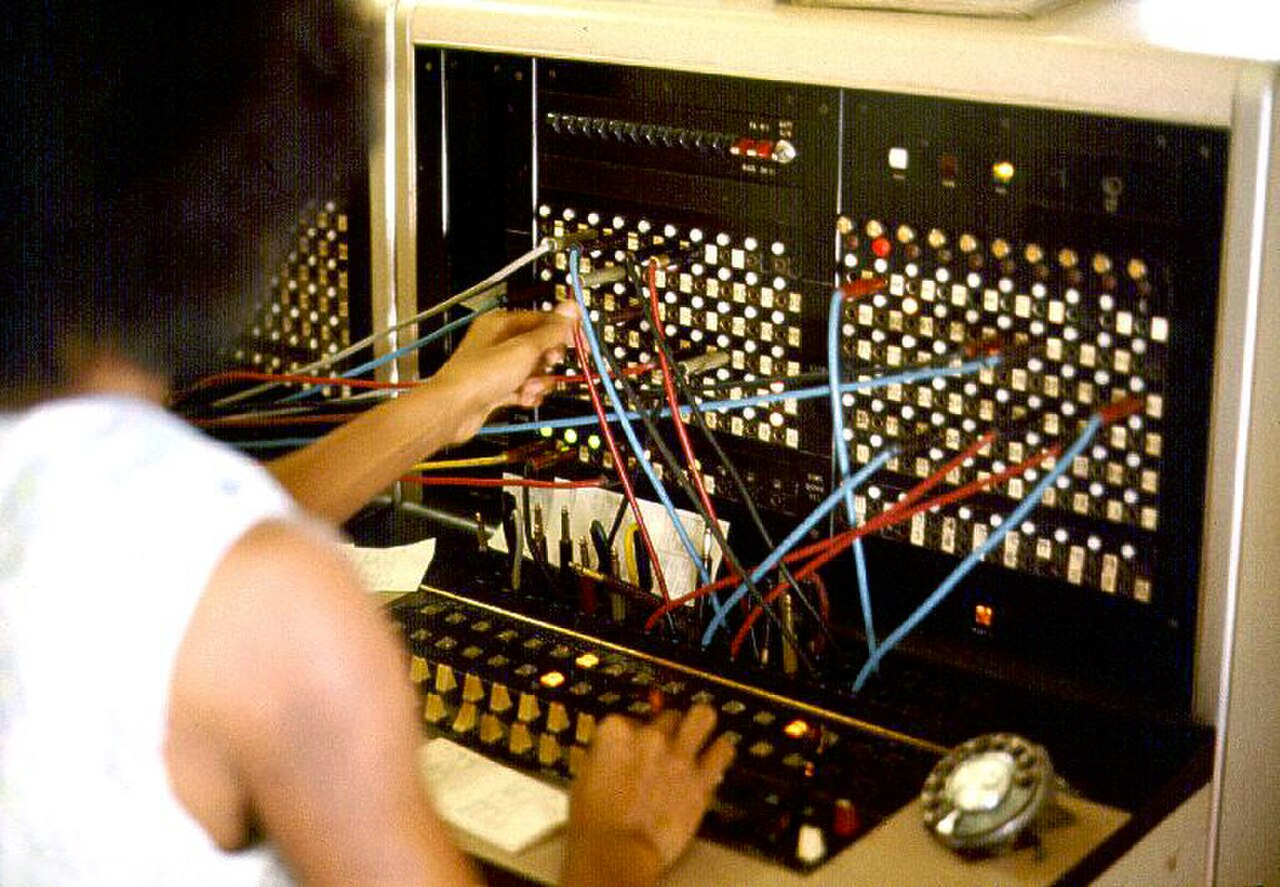
Before dial phones, every call went through a person. Telephone operators sat at switchboards and connected callers by hand, plugging cords into the right jacks.
It was one of the biggest jobs for women in America. According to the Morven Museum's history of the Bell System, by 1950 Bell employed more than 340,000 operators, about one in every 13 working women in the country. About another million women worked switchboards at private businesses, hotels, and hospitals.
A Day on the Job
A U.S. Women's Bureau report from 1963 describes the work in the 1930s. Each operator sat at an assigned spot at the board, responsible for a certain group of customers.
When a customer lifted the receiver, a small light came on beside that customer's jack. The operator plugged in a cord and asked, "Number, please?" If the call was local, she plugged the other end of the cord into the right line and rang it. Lights told her when both people hung up, so she knew when to pull the plugs.
If the number was served by another office, she passed the call to an operator there. A long-distance call took at least two operators, and often four, all working together down the line.
Multiply that by hundreds of calls an hour, and you start to see why the job was exhausting.
The Skills Nobody Saw
Speed, first. Operators were trained and timed, with practice calls in training classes before they ever touched a live board.
Politeness, always. When Iowa set up the nation's first state-sponsored school for operators in 1915, politeness was called the "keynote" of the operator's code. That held even when callers were rude, which they often were.
And judgment. Operators gave out the time, helped with emergencies, and handled all kinds of delicate requests. Small-town operators often knew everyone on their board by voice.
The Rules
For much of the job's history, phone companies were very particular about who could apply. A 1916 study found that 65 percent of Iowa's operators were between 16 and 21. Companies set age limits and standards for appearance and schooling, and expected young women to leave the job once they married.
The rules lasted. Former Maine operators who started in the 1960s told NPR there was a strict dress code: no pants and no miniskirts.
In small towns, the job kept a little more freedom. Operators there sometimes got holiday gifts from the families they connected every day.
Tools of the Trade
The switchboard. A wall of jacks, each one a customer's line, with lights beside them.
The cords. Pairs of plugs on weighted cords that pulled back down into the desk when released.
The headset. A mouthpiece on a horn in front of the face and an earpiece, worn for an entire shift.
The ticket. For long-distance calls, operators wrote down timing and charges by hand.
Why It Disappeared
The dial. Dial phones and automatic switching spread steadily from the 1940s on, connecting local calls with no operator at all.
Direct long-distance dialing. Through the 1950s and '60s, customers gained the ability to dial long-distance numbers themselves, which cut out most of the remaining operator work.
Computers. Later, automated systems took over directory help and even collect calls.
Where It Lives On
Dial 0 on a landline and in many places you can still reach an operator. The 911 dispatcher, the hospital switchboard, and the receptionist with a headset all do pieces of the same job. And some groups of retired operators still get together to swap stories, as a group in Maine did for NPR in 2021, a few of the last people who remember saying "Number, please?" for a living.
Did your mother, grandmother, or aunt ever work as a telephone operator?
Sources
- "Women Telephone Workers and Changing Technology," U.S. Women's Bureau Bulletin No. 286, 1963
- Marjorie Levine, "'A Kind of Human Machine': Women's Work at the Switchboard," *The Palimpsest*, 1993
- Morven Museum & Garden, "Ma Bell" exhibition
- "Switchboard operators remember life working for Ma Bell," NPR, Dec. 28, 2021
Related Reading
- [Why Old Phone Numbers Started With Words](/remember-when/why-old-phone-numbers-had-words)
- [another category slug]